
If, like me, you’re searching the web for the pathogenic (infectious) agents in humans, you might find for example: https://www.doctissimo.fr/html/dossiers/infections/microbes-parasites.htm
or other similar sites, you’d find the following list: virus, bacteria, molds, and parasites.
That is all well-known, is that all?
Oh yes, we also find archaeobacteria, or archaea https://www.santelog.com/actualites/microbiome-de-la-peau-les-archees-ces-agents-secrets-de-la-sante-cutanee
Moving on, let’s continue our exploration:
https://fr.wikipedia.org/wiki/Peau: human skin is naturally covered with a population of microorganisms, either specialized or opportunistic, which we call cutaneous flora or cutaneous microbiota: bacteria, mites, micro-nematodes, micro-fungi.
Micro-fungi, hey this is new; could we have micro-chanterelles on our skin?
Let’s continue. https://fr.wikipedia.org/wiki/Microbiote: cutaneous fungi are, for example, Malassezia furfur and Candida albicans are considered symbiotes (residents) of the skin that take nourishment from sebum and dead skin; they are less present than bacteria, but can cause mycoses in case an imbalance occurs in hydration or cutaneous pH. A mycosis most often concerns small areas of the skin and/or mucous membranes. Much more rarely, the fungus could cause serious infections, which – so we are told – usually only occur in immunodeficient individuals.
So here we are, reassured. As for the immunodeficients, let us pray for them. We have already shed a tear, some years ago, for the hemophiliacs, who were exposed to AIDS during blood transfusions, before discovering that this case was handled by the high authorities in a most scandalous manner.
We know this Candida. It is one of the molds we were talking of earlier. It can develop on the tongue and give it the appearnce of a velvety camembert. So nothing new on this side, but what about Malassezia?
Malassezia furfur (in reference to Louis-Charles Malassez) is a yeast, present (on the skin) in practically 100% of the population. It is a weak pathogen in humans (https://fr.wikipedia.org/wiki/Malassezia_furfur). Here we are once again reassured. All the same, we learn of the existence of a yeast, which is a new, weak pathogen, very true. Yet which we are all carriers of, anyway.
Reassured? Not really. Once again, Wikipedia puts us on edge: substances typical of the animal kingdom, suchs as chitin, are present in fungi (https://fr.wikipedia.org/wiki/Fungi).
This chitin, where is it present in the animal kingdom? The answer: in invertebrates, at random: dust mites. Yes, yes!
Let’s summarize.
We have learned that our body’s surface (skin and mucosa) is colonized by an extremely large population of microorganisms. They are even ten times as numerous as the cells in our bodies, this is the microbiota.
The microbiota does not only contain bacteria, but also micro-fungi. These constitute the microbiome, consisting essentially of yeasts, among which Malassezia dominates.
Nevertheless, no panicking: Malassezia is « weakly pathogenic », so we are told.
However, we cannot be satisfied just like that. Going farther, let’s quit the mainstream web. The leading scientific journal Nature, tells us that micro-fungi of the skin, dominated by the Malassezia yeast, play a major pathophysiologic role (K. Findley et a., Nature, 2013, 498(7454):367-70). In other words, micro-fungi are of major importance in human health and pathologies.
This sheds a new light.
Let’s remember, fungi, as in yeasts, as in Malassezia, contain chitin, which is in some way their skeleton. It is an allergen that is well-known to us from dust mites. All organisms which contain it are thus potential allergy factors, and not only on the skin level. This has been demonstrated with a parasitic worm that causes a lung allergy. This allergic reaction, which is well-documented on the cellular and biochemical level, is neutralized by a chitinase, an enzyme that destroys chitin (Tiffany Reese et al., Nature, 2007, 447(7170):92-6). This is the formal demonstration that the chitin of parasitic or saprophytic organisms is an allergy source.
What about Malassezia? It is only recently that this yeast has been associated with atopic dermatitis (D.Nowicka and U. Nawrot, Mycoses, 2019, 62(7):588-96), but, beacuse there is a but: « The mechanisms that involve Malassezia in this pathology are not well known; studies must be continued ». Srudies, continuing worldwide in dozens of teams, publishing hundreds of articles and . . . no progress.
Conclusion, if your tongue is like an old moldy camembert, even a dermatologist will notice that you have a problem and will cry out triumphantly: « Eureka, mycosis! ». But if you have redness, pimples all over your body with unceasing itching that do not leave you neither night nor day, which greatly alter your social and personal relationships, it is « atopic dermatitis », in other words, « I don’t know what you have and and you are wasting my time ». How in learned terms these things are said! Moreover, in some dermatologists’ waiting rooms there are posters warning you that if you have this, the doctor cannot help you, do not bother him. At other times, this type of judgement is not preferred. A conscientious professional, if he has the time, will perform in-depth examinations for you, at the forefront of clinical research, from which will emerge, after a few weeks, that … everything is fine, you are simply stressed.
Stress, the cry from the dermatologist’s heart, I’ve been through it, and I am not the only one.
Atopic dermatitis is not the only inflammatory illness of the skin that has a major impact in terms of public health, one should not forget psoriasis. The cause, again, is stress, fatigue, blah-blah-blah, the usual. More seriously, if some scientists ask the question of agents responsible for dermatitis, with regard to psoriasis no one even ventures to consider it. Nevertheless, among the some 50000 scientific publications that are dedicated to it, since a recent date some have ventured to mention the mycobiome and naturally Malassezia. They come from modest laboratories and are mentioned in modest journals (between parentheses: very often do the great scientific advances appear first in modest journals). Citing for example the remarkable work of Zuzana Stehlikova et al., Frontiers in Microbiology, 2019, 10:438-. The title of the journal is significant: it reflects a research « on the margins ». This is a good start; we await the rest.
Again, we go farther. The health problems caused by Malassezia are not limited to the skin. « The mycobiome’s impact on human health is poorly understood, underestimated and understudied », recall English researchers, who provide a striking example: Malassezia is involved in the development of pancreatic cancer, one of the most lethal cancers out there (B. Aykut et al., Nature, 2019, 574 (7777):264-7).
Make no mistakes, despite my piques, I have no doubt that dermatologists are competent and conscientious. I do not question these professionals, but the teaching they have received, therefore the faculty, and byeond, the researchers, or more precisely the research policy, public or private, which shows in this field, as well as many others, a dramatic inefficacy of patient treatment. The antifungal drugs available can provide some relief when combined with steroids, or others, but the problem still remains.
So what should be done? It must be clearly seen the infectious agents other than viruses and bacteria pose scientific problems. Their cellular organization is close to ours. The therapeutic approach must be completely rethought. We need radically original medicines. Alas, no one seems to be thinking about it.
However, there is an exception. In Strasbourg, the Nobel laureate Jules Hoffmann and his wife Danièle had explored the anti-infectious defense of insects (all organisms, plants as well as animals have defense mechanisms comparable to ours). They have shown that insects produce very particular defense molecules, comprising of non-classical amino acids. Like every researcher who wishes to apply his work to the interest of society, Jules Hoffmann had taken steps to develop a drug, based on what insects had taught him. The way – of the cross – is well-traced: create a start-up to demonstrate the therapeutic interest of a molecule, then propose it to investors likely to commit considerable sums (several hundred million euros) in order to put a new drug on the market. Jules Hoffmann had thus created Entomed, named by combining entomology and medicine.
Thus we saw the birth of hope for a new-generation drug, unline all the others, but the adventure was cut short. In part, this medication would have been difficult, therefore expensive, to produce, but above all the pharmaceutical industry does not like to think outside the box. Anyway, investing large sums to treat atopic dermatitis is not very motivating. Since there is stress, it is better to prescribe rest, it is less expensive, As for psoriasis, the responsible agent is unknown, therefore an anti-infective drug would not be applicable. As for the multiple pathologies related to the mycobiome, move along, there’s nothing to see here.
Too bad for us!
I had a dream! I had a dream that the Faculty of medicine and the ones behind it responsible for research policy, public and private, as well as investors in the pharmaceutical industry, take into consideration the major public health problems, that result from pathogens hitherto almost ignored, including, in the first place, Malassezia.
- However, if Malassezia seems ignored by dermatologists, it is not ignored by veterinarians, see esccap.fr/champignons/malassezia-chien-chat
Why then, veterinarians and not doctors? I put forward a hypothesis: Veterinary science is much less « noble » than medicine. It is therefore not subjected to the same pressures amassing from High Authorities. In other words, it is freer. I don’t say these words at random. In the Marseilles faculty of medicine I could see from the inside the exertion of these types of pressure.
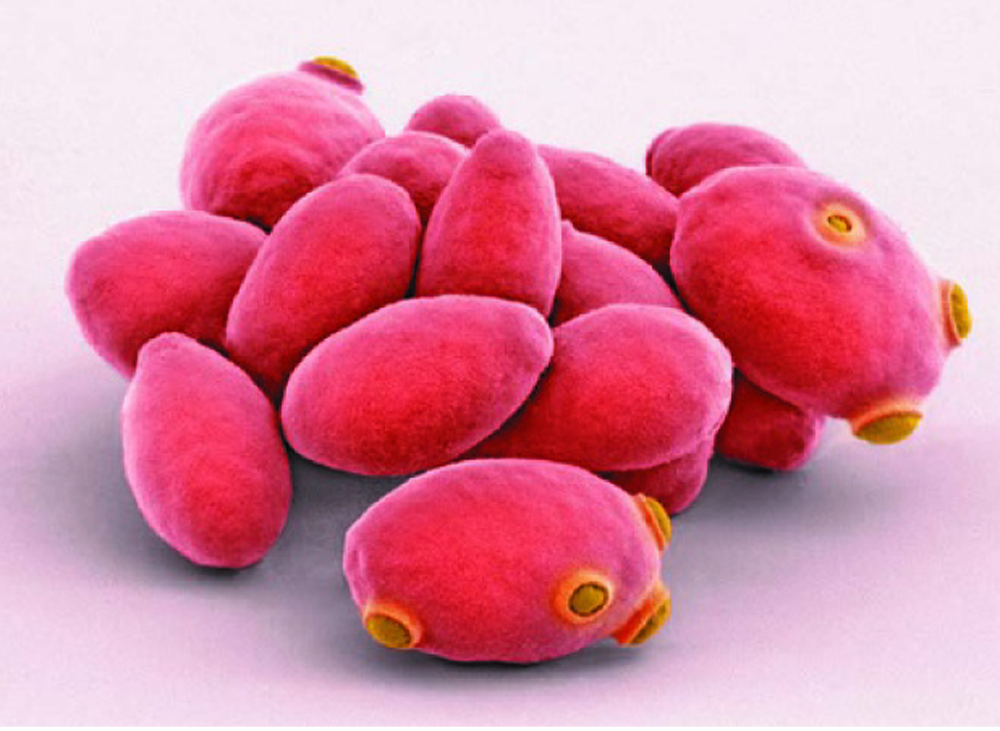
Illustration: baker’s yeast. Malassezia looks the same.


Laisser un commentaire
Participez-vous à la discussion?N'hésitez pas à contribuer!